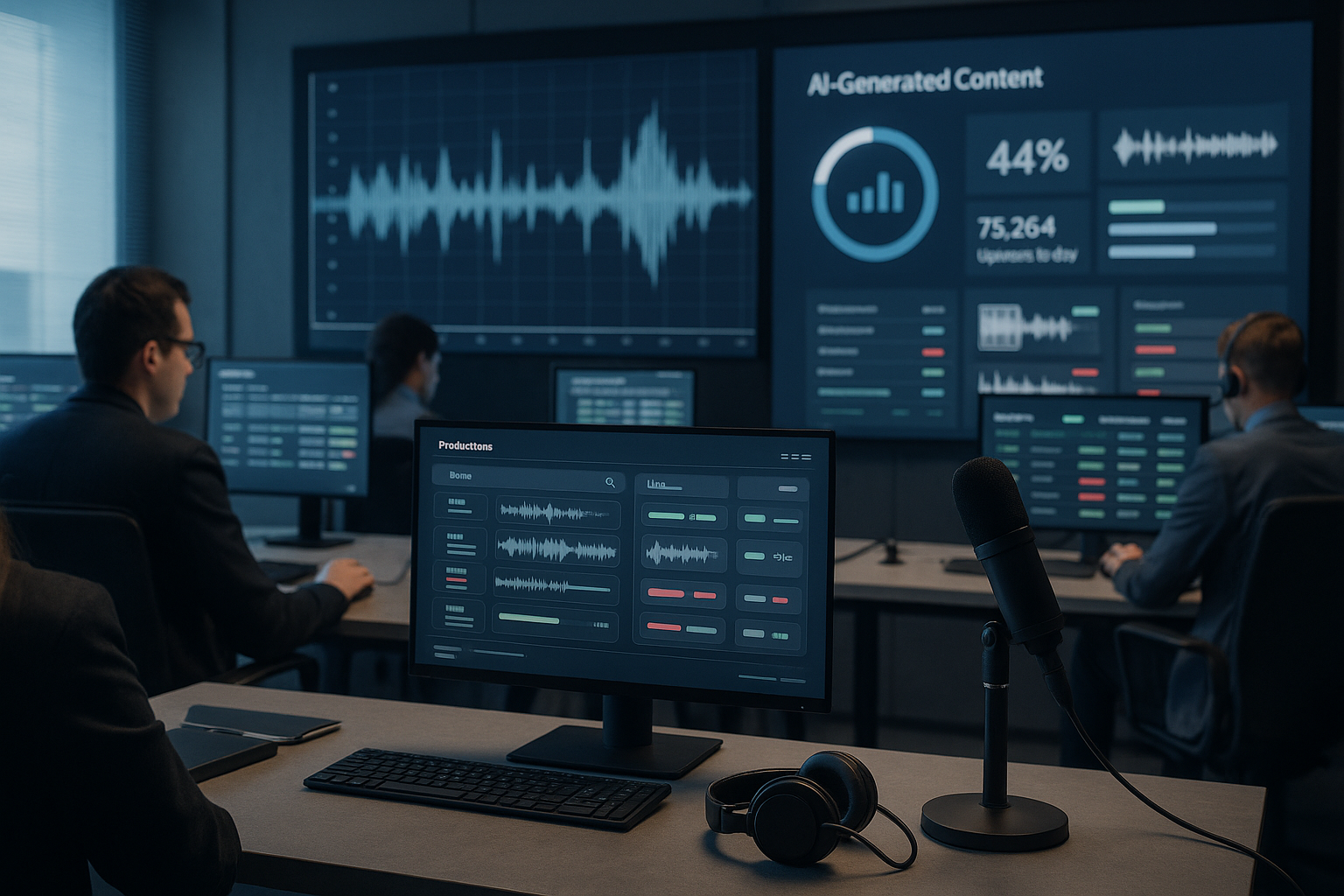
Deezer says 44% of daily uploads are AI-generated as synthetic music surges past 75,000 tracks a day
Deezer said on April 20, 2026, that AI-generated music now accounts for 44% of all new uploads to its platform, a sharp jump that shows how quickly synthetic audio has become a daily operational issue for streaming services. The company said it is now receiving almost 75,000 AI-generated tracks per day and more than two million per month.
AI uploads are crowding the front door
The French streaming service said the share of AI-generated tracks has climbed steadily over the past year, rising from roughly 10,000 per day in January 2025 to about 30,000 in September, 50,000 in November and around 60,000 in January 2026 before reaching the current level. That trajectory suggests AI music is no longer an edge case in catalog ingestion; it is becoming part of the normal volume services have to process, classify and police.
Fraud detection is becoming part of the product stack
Deezer said 1% to 3% of total streams on the platform are AI-generated, but 85% of those streams are detected as fraudulent and demonetized. Tracks identified as AI-generated are removed from algorithmic recommendations and excluded from editorial playlists, while the company said it will no longer store high-resolution versions of those files. The measures point to a shift from simple labeling toward direct controls on monetization and discovery.
Why the scale matters now
The surge creates a practical problem for music platforms far beyond metadata housekeeping. If synthetic uploads keep rising while real listening remains a small share of playback, platforms have to improve detection systems fast enough to prevent payment dilution, recommendation pollution and abuse at scale. Deezer’s latest figures indicate that the pressure is now coming from volume as much as from quality, with AI tools flooding the supply side faster than most services can manually review it.
A test case for the rest of streaming
Deezer said a survey it conducted last November found that 97% of participants could not tell the difference between fully AI-generated and human-made music. That finding helps explain why platforms are tightening automated controls rather than relying on listeners to notice what is synthetic. The company’s latest disclosure makes clear that AI music is no longer just a creative novelty; it is a catalog-management, fraud-prevention and payout-integrity problem that streaming services are now confronting in real time.
Source: TechCrunch
Date: 2026-04-20