OpenAI says ChatGPT is already being used in life sciences by about 200,000 people a week
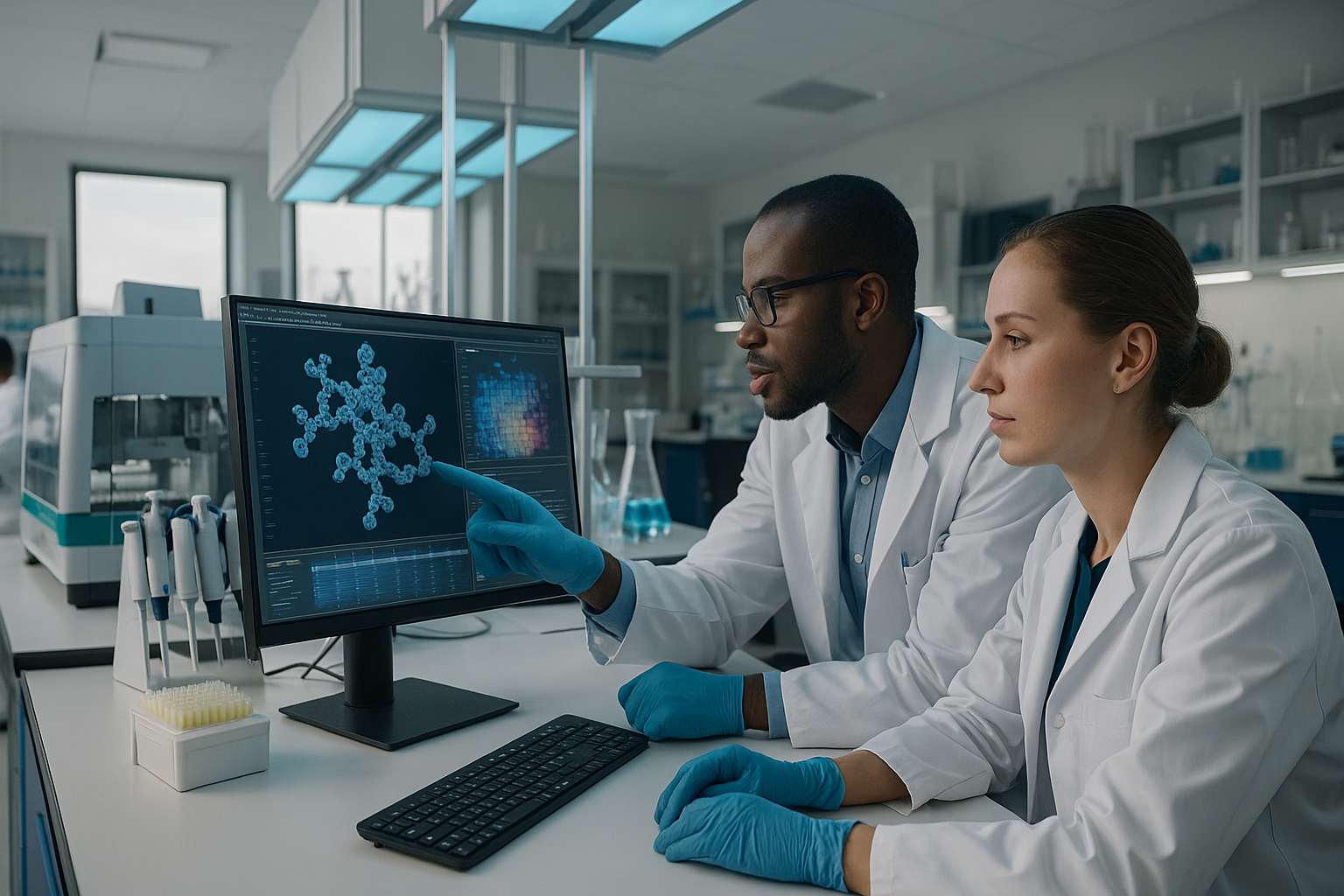
OpenAI is putting a sharper scientific frame around its most visible consumer product, arguing in a new April 2026 report that ChatGPT is increasingly being used as research infrastructure in the life sciences. The company says roughly 200,000 weekly users are already relying on the system for graduate-level or professional work in biology, medicine and drug discovery.
OpenAI’s April 2026 life-sciences report puts AI inside the research workflow
The report, titled Reigniting the Discovery Engine for Tomorrow’s Cures, describes AI as a tool that can help researchers synthesize literature, bridge disciplinary gaps and accelerate the path from hypothesis to experiment. OpenAI says about 75 percent of identified life-sciences usage is tied to literature review, while roughly 25 percent supports analysis.
That usage pattern matters because it places generative AI closer to the front end of scientific work, where researchers are sorting evidence, comparing studies and deciding which questions are worth testing next. The report argues that biology has entered a computational era in which models, data and lab automation can operate as parts of the same discovery stack.
The shift now is from assistants to scientific instruments
OpenAI’s core claim is not that AI has replaced biomedical expertise, but that it is starting to absorb some of the translation work that slows research teams down. The report describes an emerging model in which AI helps connect literature, experimental design and domain-specific judgment, allowing smaller teams to move faster across specialized fields.
The company also points to a broader commercialization reality: AI’s usefulness in life sciences will depend on whether research groups can connect models to real datasets, wet-lab validation and clinical-trial infrastructure. In other words, the bottleneck is no longer only model capability. It is the physical and regulatory machinery needed to turn predictions into validated results.
Why the life-sciences angle matters now
OpenAI’s timing is notable because the company is making a case that AI adoption in science is already measurable, not hypothetical. The report says the technology is being used in work that spans literature review, analysis and research coordination, while also arguing that progress in medicine is constrained by slow, expensive development pipelines.
For biotech and pharmaceutical teams, that points to a near-term operational question: which parts of discovery can be safely delegated to AI, and which still require human verification, lab testing and clinical evidence. The answer will shape how quickly AI moves from a productivity tool for researchers to a standard layer in biomedical R&D.
The report closes by treating AI as a new scientific instrument for life sciences rather than a novelty feature, a framing that reflects where the market is heading as research groups look for practical gains in speed, cost and throughput.
Source: OpenAI
Date: 2026-04-01