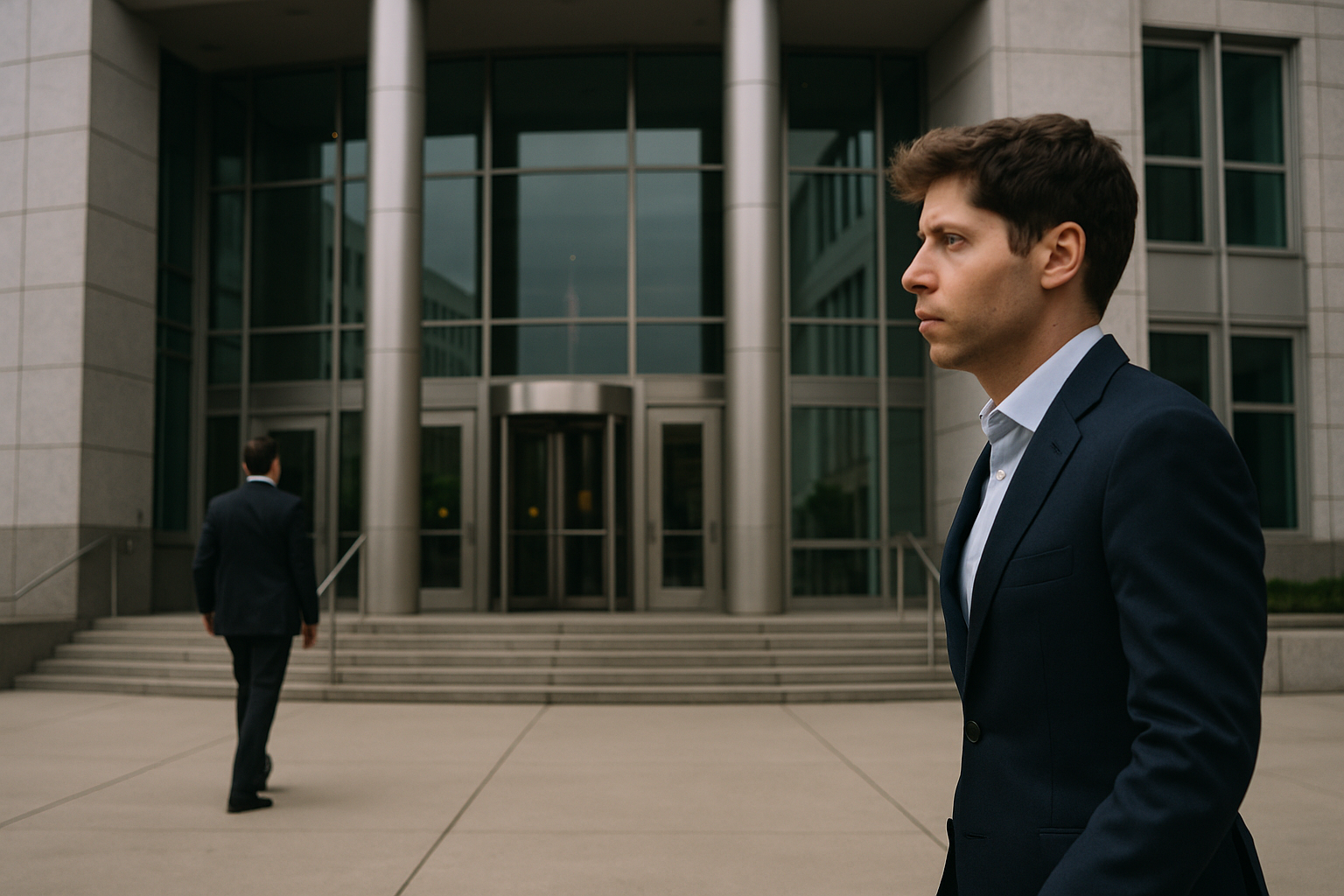
Musk v. Altman trial opens with OpenAI’s for-profit shift under a microscope
The legal fight between Elon Musk and OpenAI co-founder Sam Altman moved into open court on April 27, 2026, as jury selection began in Oakland in a case that goes to the heart of how OpenAI transformed from a nonprofit research lab into one of the world’s most valuable AI companies.
Oakland jury selection puts OpenAI’s structure on trial
The case centers on Musk’s claim that OpenAI departed from the charitable mission it was built around and instead became a commercial enterprise designed to attract capital and dominate the AI market. Altman and OpenAI have rejected that framing, arguing that the company’s current structure is lawful and necessary to fund frontier AI development at scale.
Opening proceedings come after months of pretrial disclosure that have pulled internal documents and past conversations into the record, setting up a trial that is likely to revisit the company’s earliest promises as well as its most recent business moves. The dispute is not just historical: it is now a live test of whether OpenAI’s evolution can withstand scrutiny in a courtroom.
Sam Altman’s expansion strategy is now part of the backdrop
The timing matters because the trial opens as OpenAI is accelerating commercial and capital commitments. On February 27, 2026, OpenAI said it had secured $110 billion in funding commitments from Amazon, SoftBank and Nvidia, with Amazon leading the round and planning a multibillion-dollar investment program tied to OpenAI’s infrastructure needs. The company said the money would help it expand capacity and support more enterprise deployment of its systems.
That scale of financing makes the dispute more than a founder feud. It frames Altman as the executive responsible for turning OpenAI into a capital-intensive AI platform that depends on large outside commitments, cloud distribution and industrial-scale compute access to keep pace with demand.
Why the outcome could matter beyond the courtroom
If Musk succeeds in persuading the court that OpenAI strayed from its original mission, the case could intensify pressure on the company’s governance and its relationship between nonprofit and for-profit components. Even without a sweeping ruling, the trial may expose more about how OpenAI made decisions as it moved from a research organization into a business with global enterprise and consumer ambitions.
For Altman, the immediate stakes are practical: defending the company’s structure while continuing to secure the infrastructure, partners and legal room needed to keep OpenAI’s products growing. The first courtroom phase makes clear that the fight over OpenAI is now as much about corporate control as it is about artificial intelligence.
Source: AP News
Date: 2026-02-27T15:17:48Z