State AI regulation keeps advancing as Washington stalls on a national rule
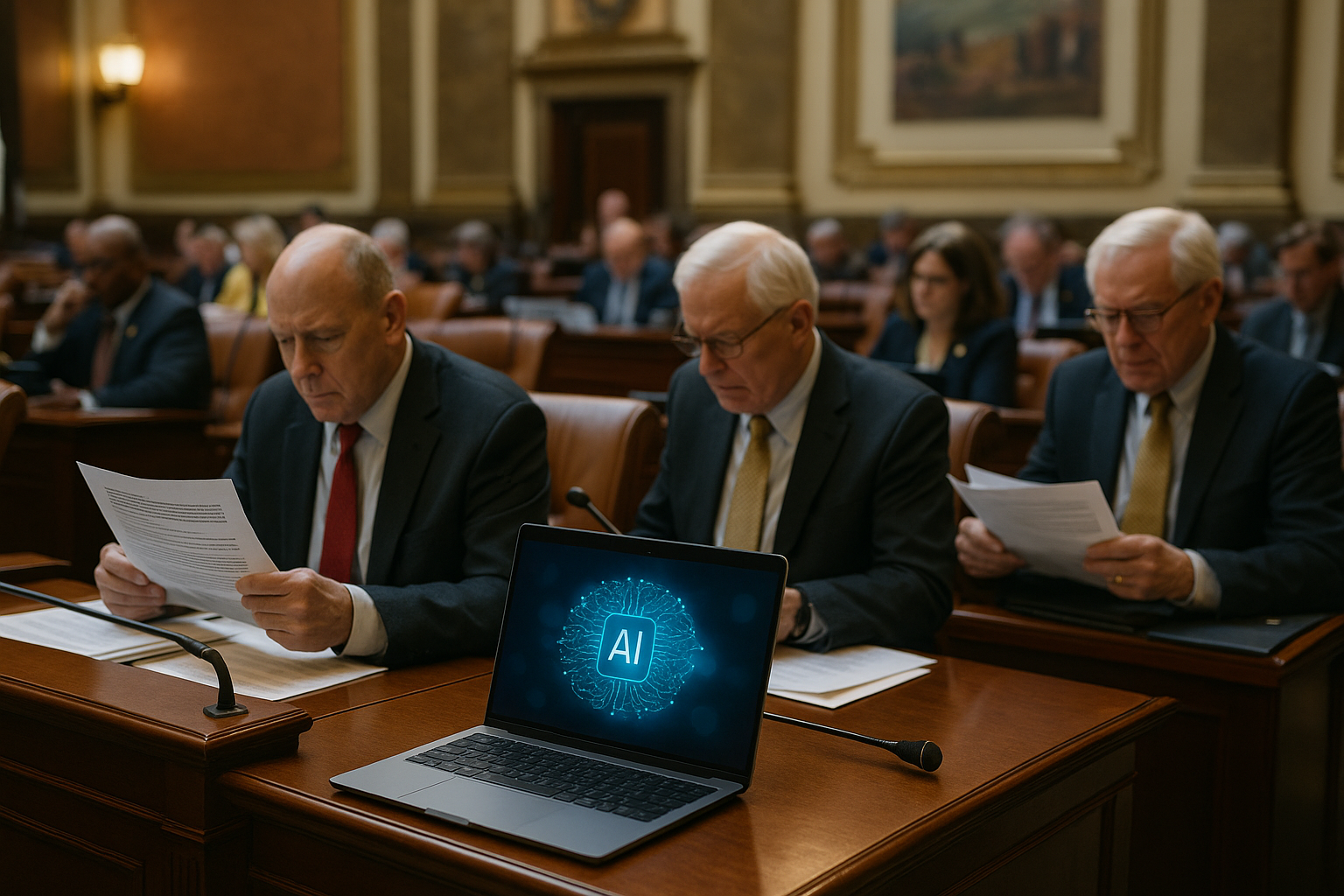
State lawmakers are continuing to press ahead on artificial intelligence rules even as the Trump administration works to block a patchwork of state laws and push Congress toward a single national standard. In Utah, a Republican state representative running for the state Senate has made AI regulation central to his campaign, reflecting how quickly the issue has moved from a niche policy debate to a live political fault line.
Utah becomes a test case for AI oversight
Doug Fiefia, a former Google employee, has tied his campaign to AI safety after his state proposal requiring companies to include child safety protocols was blocked this year. His stance puts him at odds with a White House that has argued state-by-state rules could burden innovation and weaken the United States in its competition with China.
The clash is not isolated. Officials in Florida, New York and other states are pushing ahead with their own proposals, from chatbot disclosures to rules aimed at deepfake pornography and dangerous model behavior. AP reported that more than 1,000 state legislative proposals now address AI, a sign of how broad the regulatory scramble has become.
Washington pushes preemption, but states keep writing laws
The White House has issued an executive order and a policy framework aimed at steering Congress toward preempting state AI laws seen as too restrictive. But with no durable federal legislation moving through Congress, statehouses are filling the gap with narrower rules tailored to consumer protection, child safety and disclosure requirements.
That tension is especially visible in Republican-led states, where some lawmakers are resisting the federal push to slow local regulation. AP also reported that Florida Gov. Ron DeSantis has put AI on the agenda for a special legislative session, while AI bills in some other Republican-controlled states have stalled under pressure from the administration.
What the pressure means for companies building AI products
For developers and deployers of AI systems, the current split means compliance work is becoming less theoretical and more immediate. Companies active in multiple states may soon have to navigate different rules on chatbot labeling, child protections, likeness use and incident reporting, all while federal policymakers argue over whether those obligations should be standardized or preempted.
That uncertainty is already shaping lobbying, procurement and product design. Instead of one national rule set, AI firms are facing a growing need to map where their systems are used, which state laws apply and whether features that are acceptable in one jurisdiction could trigger liability in another.
With Congress still divided, the regulatory contest is shifting to state capitols, where the next AI rules are likely to be written one bill at a time.
Source: Associated Press
Date: 2026-04-19T11:47:07Z